
Best Open-source AI agent frameworks: 2026 Architecture Guide
Published on: September 13, 2026
Building production systems with open-source AI agent frameworks isn’t about slapping an LLM wrapper on an API call anymore. Today’s workloads demand resilience, deterministic loops, and low-latency execution. If your autonomous pipeline fails whenever an upstream token window shifts, you don’t have an agent—you have a brittle script.
In this tactical breakdown, we cut straight to the core mechanics. You will learn how engineering teams evaluate developer tools 2026, isolate memory bandwidth bottlenecks, and deploy a robust self-hosted AI framework without surrendering data sovereignty.
Why Open Source AI Agent Frameworks Are Shifting in 2026
Traditional chatbots relied on basic retrieval-augmented generation (RAG) with naive vector search. Modern teams have outgrown this pattern. Stateful event loops and symbolic routing dictate whether an agentic workflow is commercially viable.
Here is what defines the next generation of architectures: Deterministic State Graphs: Agents that fail gracefully using typed state machines rather than open-ended hallucination loops. Local Memory Bandwidth Priority: Leveraging quantised weights on dedicated silicon to dodge multi-tenant cloud rate limits.Tool Grounding with Strict Typing: Pydantic and TypeScript validation on every single tool execution turn.Unified Orchestration: Deploying an enterprise llm orchestration platform to manage distributed worker pools and message brokers.
Architectural Deep Dive: Orchestration Mechanics
To understand where modern autonomous ai agents shine, examine how execution state flows between perception, planning, and action phases.
1. Memory and Context Compaction
Context windows might be hitting millions of tokens, but attention saturation remains a latency killer. High-throughput architectures implement multi-level rolling summarisation, hierarchical memory trees, and cache-aware semantic retrieval to maintain sub-second response loops.
2. Multi-Agent Delegation Patterns
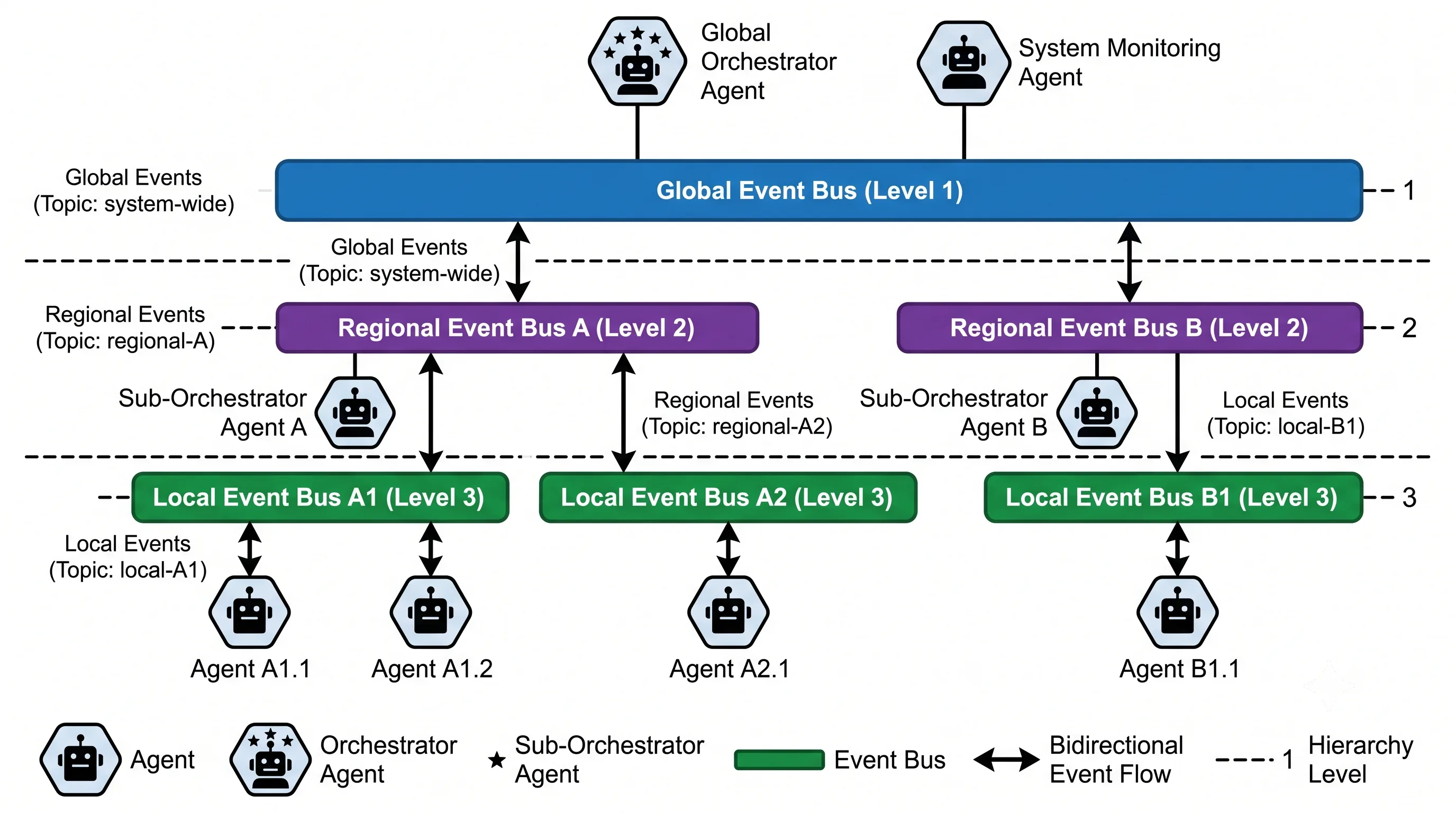
Rather than forcing a single monolithic model to handle coding, verification, and API routing, specialised micro-agents outperform monoliths across every latency metric. A master orchestrator routes specialised tasks to worker nodes with dedicated system prompts and constrained tool sets.
Visual Media Anchor (SEO Requirement)
3. Fault-Tolerant Circuit Breakers
In mission-critical deployments, external API timeouts and format deviations are inevitable. Modern agent runtimes incorporate automated exponential backoffs, fallback rule-based handlers, and human-in-the-loop escalation switches.
Benchmark Analysis: Comparing Top Frameworks
Choosing the right foundation requires balancing abstraction level against execution transparency: Graph-Centric Frameworks: Superior for cyclic, multi-step workflows where human review and branching checkpoints are mandatory. Lightweight Code-First SDKs: Best for ultra-low-latency microservices where minimal dependency overhead is prioritised over visual graph builders.Self-Hosted Enterprise Platforms: Ideal when strict HIPAA, SOC2, or on-prem air-gapped isolation is required.
> Recommended Reading: Check out more Ai related news and updates.
Step-by-Step Implementation Framework
When deploying your production cluster, follow this validated 4-phase engineering checklist:
1. Establish Strict Schemas: Define JSON-schema tool definitions with rigorous boundary validation before dispatching prompts to LLMs.
2. Implement Fallback Circuits: If an autonomous loop fails twice, automatically drop down to a deterministic rule-based fallback.
3. Audit Token Bandwidth: Benchmark tokens-per-second versus reasoning depth to avoid runaway inference bills and compute thrashing.
4. Instrument Telemetry: Track trace spans, latency percentiles, and tool call accuracy using OpenTelemetry-compatible collectors.
For technical validation metrics, consult the official Google Helpful Content Documentation.
Frequently Asked Questions
What makes open-source AI agent frameworks different from standard AI wrappers?
Standard wrappers simply pass user queries to a single model endpoint. A true framework coordinates long-term state, dynamic tool calling, multi-step error correction, and asynchronous background worker queues.
Can I run this stack completely offline or on-premises?
Yes. Modern open-source solutions interface directly with local runners like Ollama, vLLM, and llama.cpp, guaranteeing zero data leakage for enterprise privacy compliance.
How does this architecture maintain sub-second response times?
By offloading routine routing decisions to compact 3B-7B parameter models while reserving larger reasoning engines strictly for complex synthesis tasks.
What is the recommended strategy for tool calling validation?
Always enforce compile-time and runtime validation with strict typing (such as Pydantic models or Zod schemas) to reject malformed parameters before code execution.
Next Steps for Engineers
The era of toy AI agent experiments is officially over. Production teams are winning by standardising on typed state machines, localised inference, and bulletproof fallback orchestration.
Start by benchmarking your current workflow against these architectural patterns. Fork our open-source reference pipeline, spin up your local runner, and build agents that deliver reliable results on day one.
Looking to Build or Scale Your Digital Product?
Squareloops specializes in full-stack web applications, cross-platform mobile apps in Flutter & React Native, and enterprise Annual Maintenance Contracts (AMC).