
ChatGPT Astra: Is the Greatest Nightmare of Developers Becoming True?
Published on: September 9, 2026
The Announcement That Changed Everything
OpenAI has released ChatGPT Astra. The name sounds like another incremental upgrade. Another version bump. Another set of benchmark improvements. But that is not what this is.
This release marks a fundamental shift in what AI can do. It is not a better chatbot. It is not a faster coding assistant. It is an autonomous agent that controls the operating system itself.
The implications are massive. For years, developers have debated whether AI would replace them. The conversation was always abstract. “Someday,” people said. “Eventually,” they argued.
That day is here.
ChatGPT 6.0 Astra can navigate a desktop, open a terminal, run commands, install dependencies, configure environments, and deploy applications. It does not need a human operator. It does not need a developer to interpret instructions. It takes a plain English request and executes it end-to-end.
This is not a tool. This is a replacement.
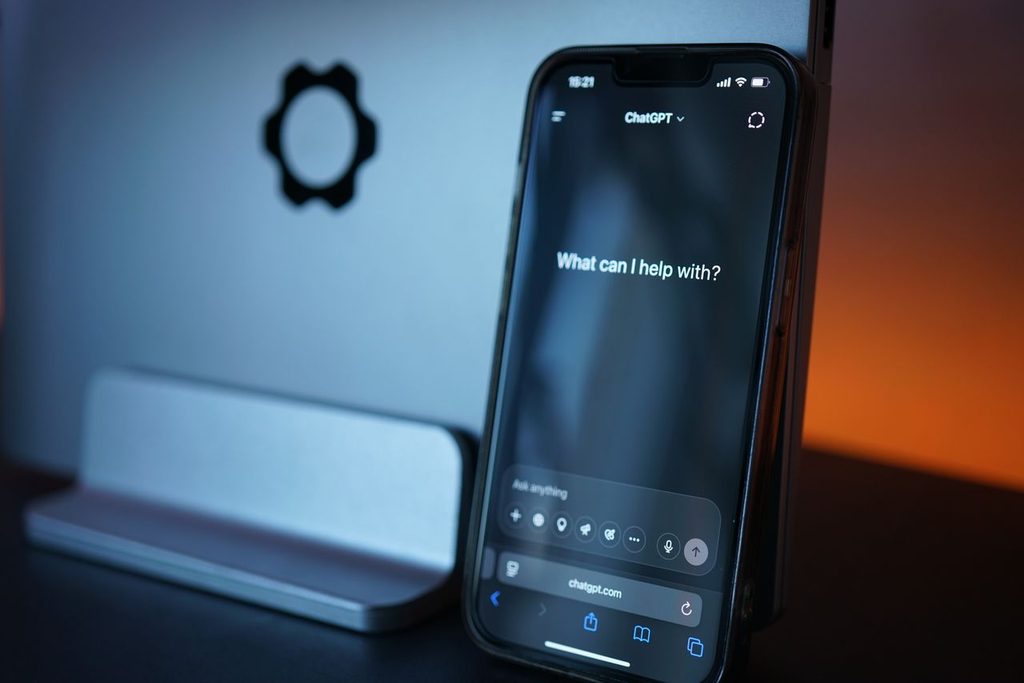
What ChatGPT Astra Actually Does
Most people still think of AI as a text generator. That mental model is outdated. Here is what ChatGPT Astra can do.
Full Operating System Control
Astra can operate a computer like a human user. It opens applications. It clicks buttons. It drags files. It navigates the desktop environment on Windows, Ubuntu, and macOS. This is not a simulation. It is real control over the actual machine.
Terminal Autonomy
Previous models could suggest commands. The user had to copy them, paste them, run them, and report back the output. Astra eliminates that loop. It opens the terminal itself. It runs the commands. It reads the output. It decides the next step. It fixes errors without asking permission.
Environment Management
Setting up a development environment used to take hours. Installing dependencies. Configuring databases. Setting environment variables. Astra handles all of it. It installs what is needed. It configures the services. It ensures the entire stack is ready before writing a single line of application code.
End-to-End Execution
The most significant shift. Astra takes a vague instruction like “Build a website that collects emails” and delivers a working product running on a live server. No human touched the keyboard. No developer reviewed the code. The machine did everything.
The Non-Technical User Is Now the Developer
This is the detail that changes the game. ChatGPT Astra is not built for developers. It is built for everyone.
A client with zero technical knowledge can now open a laptop and type: “I need an app that lets customers book appointments.”
Astra asks clarifying questions. It confirms the requirements. It sets up the project. It writes the backend. It connects the database. It configures the server. It deploys the app. It returns a working URL.
The client never sees the code. They do not need to. They describe the outcome. The machine delivers the product.
This eliminates the middleman. The developer was the translator between human intent and machine execution. That translation layer is now automated.
Why would a client pay a developer to prompt the AI when the client can prompt the AI directly?
Astra vs. Gemini vs. DeepSeek: The Autonomy Gap
Critics will point to other models. Gemini. DeepSeek. Claude. They will say competition exists. They will say the market will adapt.
But there is a critical difference.
| Capability | ChatGPT Astra | Gemini | DeepSeek |
|---|---|---|---|
| OS Control | Yes. Full desktop and terminal access. | No. Limited to text generation. | No. API only. |
| Autonomous Execution | Yes. Runs commands and fixes errors. | No. Requires human execution. | No. Requires manual integration. |
| Environment Setup | Yes. Installs and configures everything. | No. Suggests commands. | No. Outputs instructions. |
| Self-Correction | Yes. Reads logs and iterates. | Partial. Suggests fixes only. | Partial. Good reasoning. No execution. |
| Non-Technical Usability | High. Plain English works. | Medium. Still technical. | Low. Developer-focused. |
Gemini and DeepSeek are tools. They assist a human operator. They make the operator faster. But the operator is still required.
ChatGPT Astra removes the operator entirely.
This is not a competition between models. It is a category change. The other models are playing chess. Astra is flipping the board.
The Developer Using AI Is Not Safe Either
There is a comforting narrative in the developer community. It goes like this: “AI will not replace developers. It will replace developers who do not use AI.”
This narrative was true six months ago. It is already false.
The assumption was that AI tools would amplify the skills of the developer. The developer would use AI to work faster, ship more, and outcompete the laggards. The developer was still the operator. The AI was the tool.
Astra breaks that assumption.
The AI does not need the developer to operate it. The client does not need the developer to translate requirements. The entire workflow collapses into a single interaction between the user and the machine.
The developer using AI is now competing with the client using AI. And the client does not have to pay for the privilege.
The Critics Are Missing the Point
The backlash against Astra has already started. Privacy concerns. Security risks. Job displacement fears. These are valid discussions. But they miss the structural shift underneath.
“AI Will Create New Jobs”
This is the standard argument. Every technological revolution creates new roles. The car replaced the horse. But it created mechanics, traffic engineers, and highway builders.
The difference here is scope. Astra does not just replace one task. It replaces the entire operational layer. The developer, the system administrator, the DevOps engineer. All of them are functions that Astra can now perform.
What new job replaces that? The AI supervisor? But Astra supervises itself. It runs the tests. It reads the logs. It fixes the errors. A human watching a screen is not a job. It is a liability.
“Clients Do Not Know What They Want”
This used to be true. Clients gave vague requirements. Developers asked the right questions. The process required human judgment.
Astra now asks the right questions. It clarifies ambiguity. It suggests improvements. It handles the discovery process better than most human developers because it never gets tired, never gets frustrated, and never misunderstands due to ego or assumption.
“The Code Needs Human Review”
Astra reviews its own code. It runs the tests. It checks the logs. It fixes the failures. The loop is closed.
Human review is still valuable for critical systems. But for the vast majority of software—the CRUD apps, the marketing sites, the internal tools—human review is becoming optional. And soon, it will become obsolete.
The Economic Reality
This is the part that makes developers uncomfortable. The economics do not work in their favour.
A developer charges $50 to $200 per hour. A client pays thousands of dollars for a project. The developer uses years of accumulated knowledge to translate requirements into code.
Astra does the same work in minutes. The cost is a subscription fee. The client does not need to negotiate. They do not need to wait. They do not need to deal with scope creep, communication gaps, or missed deadlines.
The value proposition of hiring a human developer is collapsing.
This is not about whether AI writes better code. It is about whether the client needs a developer at all. And the answer is increasingly no.
Is This the Greatest Nightmare of Developers Becoming True?
This is the question that matters.
For years, developers have worried about automation. They watched factories get automated. They watched customer service get automated. They told themselves: “Our jobs are safe. Software is too complex. Creativity cannot be automated.”
ChatGPT Astra is the nightmare becoming real.
Not because it writes better code. Not because it is faster. But because it removes the developer from the equation entirely.
The client speaks. The machine executes. The product ships.
No developer in the loop.
This is the moment the anxiety stopped being theoretical. It is no longer a debate about the future. It is a reality that has already shipped.
Summary: My Opinion
I have been following these AI practices closely. I watched the earlier models. I used the tools. I understood the trajectory. But I did not expect it to happen this fast.
What changed with ChatGPT Astra is not the intelligence. It is the control. The AI now operates the system itself. Windows. Ubuntu. macOS. It runs the terminal. It installs the packages. It configures the servers. It deploys the product.
The developer used to be the gatekeeper. The person who knew the commands. The person who could manipulate the environment. That gatekeeper role is gone now.
If the client can simply say what they want and the machine does the rest, then even the developers who adopted AI are in trouble. The client does not need a prompt engineer. They need plain English. And Astra understands plain English.
So is this the greatest nightmare of developers becoming true?
Yes.
I think it is.
Not because the code is perfect. Not because the system is flawless. But because the direction is irreversible. The machine is no longer asking for permission. It is taking the wheel.
The developer game is not ending in the future. It ended the day ChatGPT Astra shipped.
The only question left is what the people who used to play that game do next.
I do not have an answer. But I know pretending it is not happening is not a strategy.
It is a funeral.
Looking to Build or Scale Your Digital Product?
Squareloops specializes in full-stack web applications, cross-platform mobile apps in Flutter & React Native, and enterprise Annual Maintenance Contracts (AMC).